Angkor National Museum, Siem Reap
The museum that explains the Khmer empire, best visited before the temples rather than after.
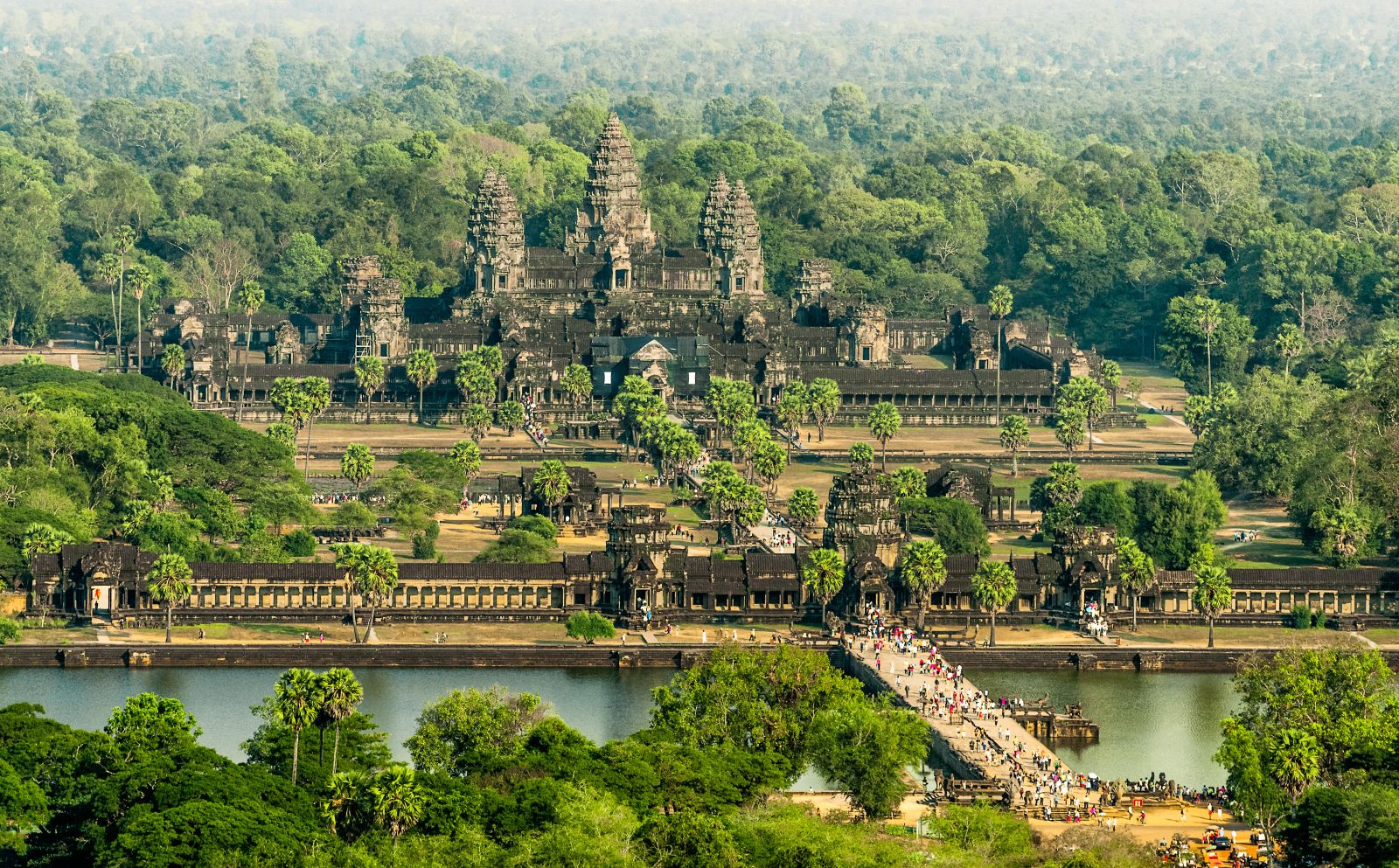
Angkor National Museum, Siem Reap
The Angkor National Museum sits on the road between Siem Reap town and the temples, and is the most efficient way to make sense of what the ruins are. Its galleries run through the rise of the Khmer empire, its religion, its kings and its architecture, using sculpture recovered from the sites themselves.
The best-known room holds a thousand Buddha images, ranged in tiers and lit low. Others deal with the shift between Hinduism and Buddhism that shaped which gods appear where, with the reigns of Suryavarman II and Jayavarman VII, and with the writing on the inscriptions that gives most of what is known about dates and names.
Going first makes the temples legible - the difference between a lintel being decoration and being a specific scene from the Ramayana. It is a short distance from the town centre.
- Angkor Wat, Siem Reap — The largest religious monument in the world, built in the twelfth century and never abandoned since.
- Banteay Srei, Siem Reap — A small tenth-century temple in pink sandstone, carved more finely than anything else at Angkor.
- Preah Khan, Angkor — A vast, half-collapsed monastic city north of Angkor Thom, quieter than any temple of its size.
- Ta Prohm, Angkor — The temple left in the grip of the forest, where silk-cotton roots grow through the masonry.
- The Bayon, Angkor Thom — The temple of two hundred serene stone faces at the exact centre of the walled city of Angkor Thom.
- Kampong Phluk, Tonle Sap — A stilt village on the Tonle Sap where the houses stand six metres above the dry-season ground.