Ban Rak Thai, Mae Hong Son
A Yunnanese tea-growing village around a lake on the Burmese border, settled by former Kuomintang soldiers.
Ban Rak Thai, Mae Hong Son
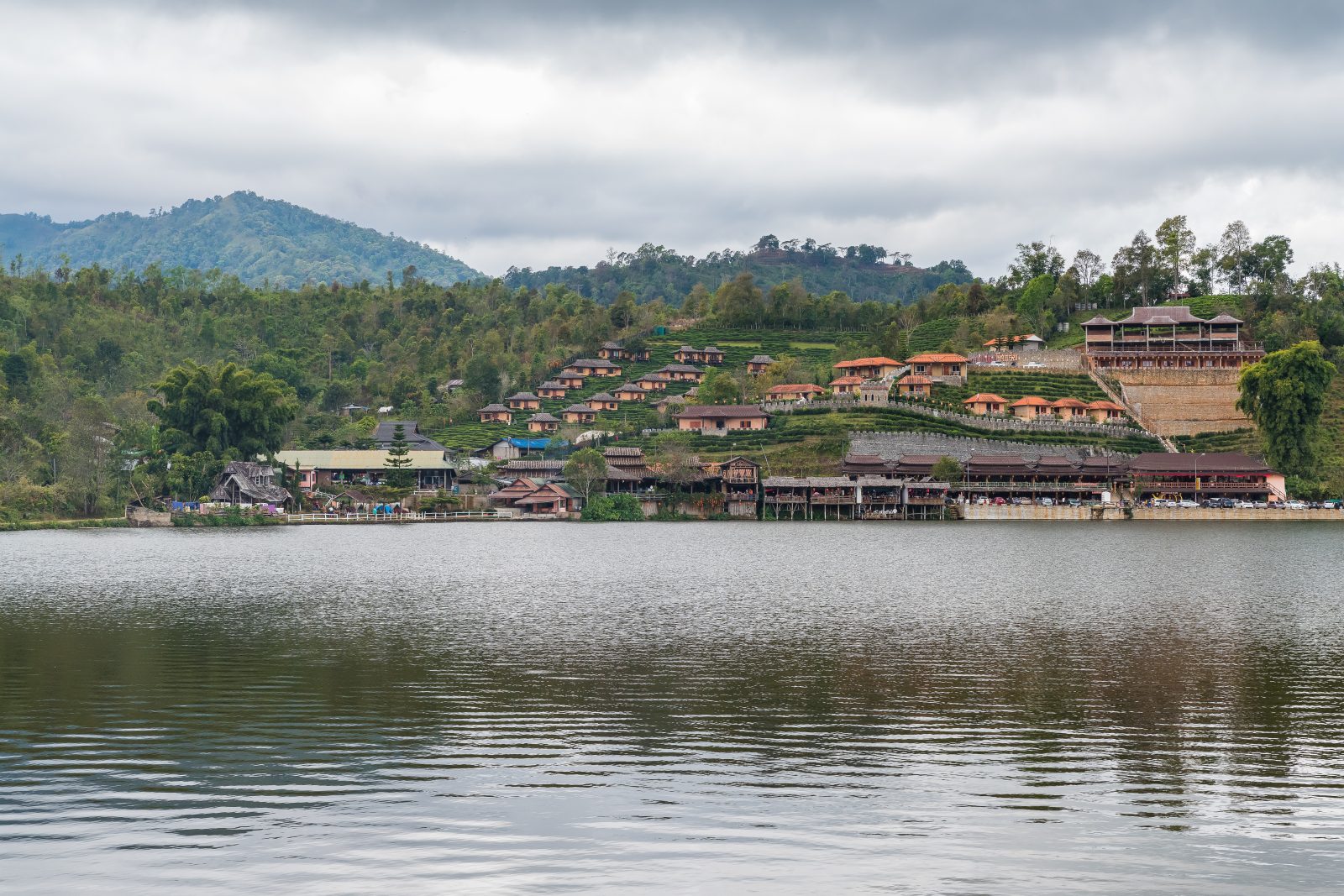
Ban Rak Thai sits in the hills on the Burmese border, about forty-five kilometres north-west of Mae Hong Son, at the end of a steep and winding road. It was settled in the mid-twentieth century by soldiers of the Chinese Kuomintang 93rd Division who crossed into Thailand after the Chinese civil war and were eventually permitted to remain.
The village is built around a small lake, with mud-walled and tiled houses in the Yunnanese manner on the slopes above and tea terraces running up the surrounding ridges. Yunnanese food, tea tasting and locally made preserves are what it trades on, and it is high enough to be genuinely cold on winter mornings, often under mist.
It is very close to the border and is reached only by the mountain road from Mae Hong Son, usually together with the hot springs and villages along the way.
- Su Tong Pae Bridge, Mae Hong Son — A long bamboo footbridge across the paddy fields, built by villagers and monks to reach a hillside monastery.
- Wat Chong Kham and Wat Chong Klang, Mae Hong Son — Two Shan temples side by side on the lake in the middle of Mae Hong Son, reflected in the water at night.
- Tham Lod Cave, Mae Hong Son — A river cave over a kilometre long, crossed by bamboo raft, with prehistoric teak coffins inside.
- Wat Phra That Doi Kong Mu, Mae Hong Son — Two white Burmese-style chedis on the hill above the town, looking down on the morning mist.